
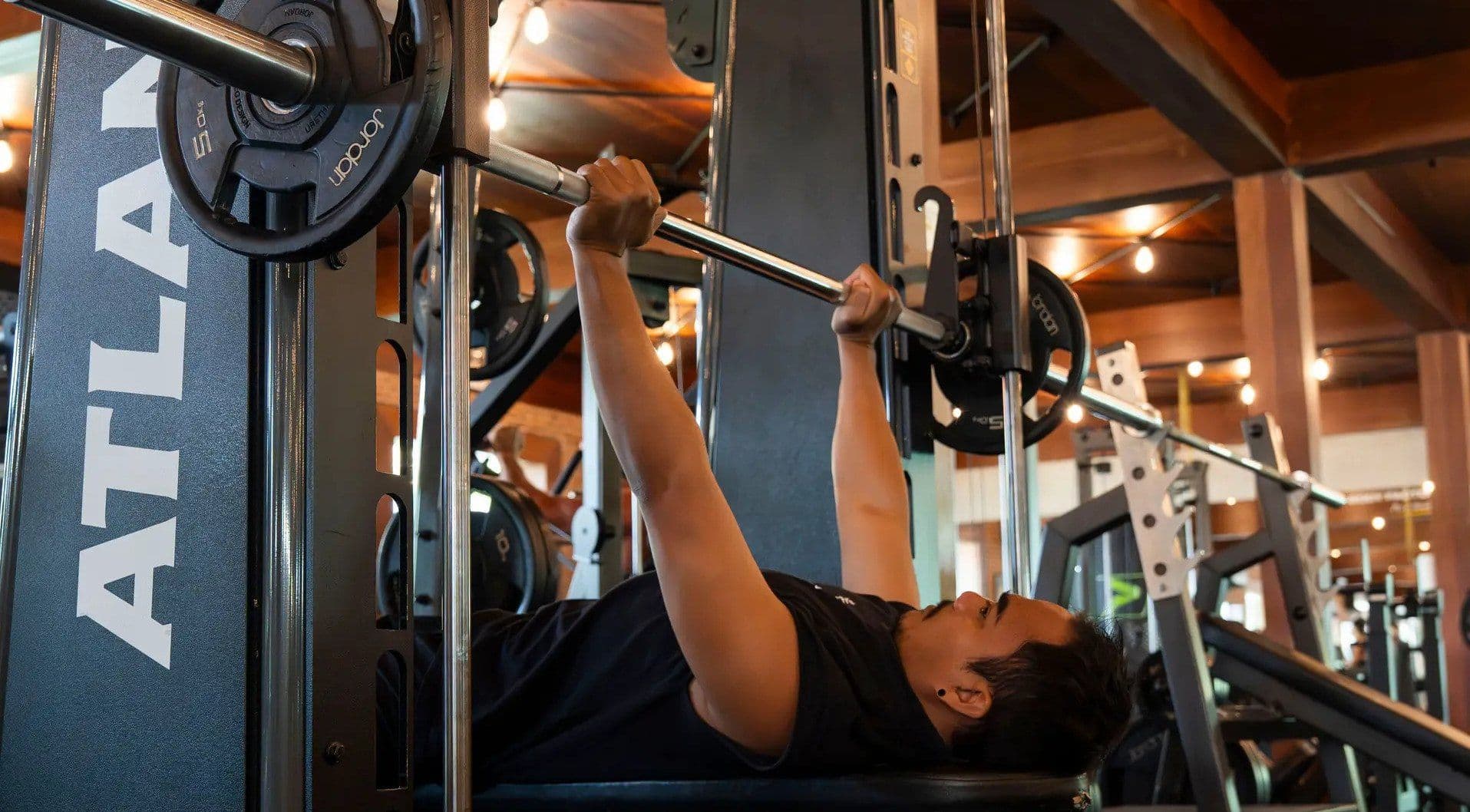
Not all push workouts deliver the same results.
The difference often comes down to how your session is structured. Prioritising compound lifts, balancing them with accessory work, and managing your training volume can help you build strength more efficiently while supporting long-term progress.
Whether you're following a push pull leg split or looking to improve your upper body training, this guide covers everything you need to know to build a smarter push day workout, including the best exercises, recommended sets and reps, and common mistakes to avoid.
What is a push day workout?
A push day workout trains the muscles responsible for every pressing movement: your chest, shoulders, and triceps. From the bench press to the overhead press, these muscles work together to generate power, build strength, and support upper body performance.
Push day is typically part of a Push Pull Legs (PPL) split, allowing you to train complementary muscle groups in the same session while giving others time to recover. It's a simple structure that's effective for beginners and experienced lifters alike.
Muscles worked during a push day
A push workout focuses on three key muscle groups:
- Chest: Drives horizontal pressing movements and contributes to upper body strength.
- Shoulders: Support pressing power while improving stability and control.
- Triceps: Extend the elbows and play a key role in every press, from push-ups to heavy bench presses.
Train these muscles with purpose, and you'll build a stronger foundation for every upper body lift.
Continue reading: Back day gym: exercises, workout plan, and training tips
How to build an effective push day workout
An effective push day workout isn't about doing every pressing exercise in the gym. It's about choosing the right movements, training them in the right order, and using enough volume to make consistent progress.
Start with compound lifts that allow you to move the most weight while you're fresh. Then add accessory exercises to increase training volume and target specific muscle groups. Finish with isolation work to strengthen smaller muscles and address any weaknesses.
A balanced push workout should include:
- 1 to 2 compound presses for strength
- 2 to 3 accessory exercises for additional volume
- 1 to 2 isolation exercises for shoulders and triceps
This structure helps you build strength, support muscle growth, and recover well enough to perform at your best in your next session.
Prioritize compound lifts
Compound exercises recruit multiple muscle groups at once, making them the foundation of every push day. They should always come first, when your energy and strength are at their highest.
Examples include:
- Barbell bench press
- Incline dumbbell press
- Overhead press
- Weighted dips
Build volume with accessory exercises
Once the heavy lifting is done, use accessory movements to add quality training volume without excessive fatigue.
Good options include:
- Machine chest press
- Dumbbell shoulder press
- Cable chest fly
- Chest-supported dip machine
Finish with isolation work
Isolation exercises help strengthen muscles that support your compound lifts, especially your shoulders and triceps.
Finish your session with movements like:
- Lateral raises
- Triceps pushdowns
- Overhead triceps extensions
Great. After that section, I'd move into the actual exercise recommendations.
Best push day exercises
The best push day exercises combine compound lifts that build strength with accessory movements that add training volume and improve muscular balance. Rather than chasing variety, focus on exercises you can perform with good technique and progress consistently over time.
Barbell bench press
A staple of any push workout, the bench press builds strength across the chest, shoulders, and triceps while allowing you to progressively overload over time.
Best for: Overall upper body strength
Incline dumbbell press
Changing the bench angle places more emphasis on the upper chest while increasing the range of motion. Dumbbells also help address strength imbalances between sides.
Best for: Upper chest development
Overhead press
The overhead press develops shoulder strength while challenging your core and upper body stability. It's one of the most effective vertical pressing movements you can include.
Best for: Shoulder strength and pressing power
Dumbbell lateral raise
Although it's not a pressing movement, lateral raises build the side deltoids, helping create stronger, broader shoulders and a more balanced upper body.
Best for: Shoulder development
Chest fly machine
The chest fly machine isolates the chest, making it an effective accessory exercise after heavy compound presses. It helps increase training volume while maintaining focus on the chest muscles.
Best for: Chest isolation
Triceps pushdown
Strong triceps improve every pressing movement. Pushdowns are easy to load, joint-friendly, and a great way to finish your workout.
Best for: Triceps strength and muscle growth
Sample push day workout
Exercise | Sets | Reps |
Barbell bench press | 4 | 5–8 |
Incline dumbbell press | 3 | 8–10 |
Overhead press | 3 | 8–10 |
Cable chest fly | 3 | 10–12 |
Dumbbell lateral raise | 3 | 12–15 |
Triceps pushdown | 3 | 10–12 |
Common push day mistakes to avoid
A well-planned workout is only part of the equation. Avoiding these common mistakes can help you train more effectively and make consistent progress.
Starting with isolation exercises
Save exercises like lateral raises and triceps pushdowns for later in your workout. Start with compound lifts while your energy is highest, so you can lift heavier and maintain better technique.
Doing too much volume
More exercises don't always lead to better results. Focus on quality over quantity by choosing a handful of movements that target your chest, shoulders, and triceps effectively.
Chasing heavier weights every session
Progressive overload isn't just about adding weight. Improving your technique, increasing reps, or controlling each movement more effectively are all signs of progress.
Skipping recovery
Your muscles don't grow during your workout. They grow when you recover. Prioritise quality sleep, proper nutrition, and adequate rest between sessions to support strength and muscle growth.
Take your push workout further
The best results come from consistency, not complexity. Stick to the fundamentals, track your progress, and make every session count.
Whether you're building strength or training for performance, Body Factory Bali provides the environment to help you reach your next goal. Come and experience how the right equipment, expert coaching, and a performance-focused community can help you train better.
Experience the difference at Body Factory Bali
FAQ
What muscles does a push day workout target?
A push day workout primarily targets the chest, shoulders, and triceps. These muscles work together during pressing movements such as the bench press, overhead press, and push-up, making them the focus of every push workout.
How many exercises should I do on push day?
Most push workouts include 4 to 6 exercises, depending on your training experience and goals. A balanced session should prioritise compound lifts before adding accessory and isolation exercises for additional training volume.
How many sets and reps should I do for a push day workout?
For compound exercises, aim for 3 to 5 sets of 5 to 8 reps to build strength. For accessory and isolation movements, 2 to 4 sets of 10 to 15 reps are generally effective for muscle growth.
How often should I train on push day?
Most people train push day once or twice a week, depending on their overall programme and recovery. If you're following a Push Pull Legs split, make sure to allow enough time for your chest, shoulders, and triceps to recover before training them again.